In recent years, fire safety on external structures has come under a far tighter scrutiny. This has affected the way external flooring systems are designed and specified, particularly on balconies and roof terraces.
But with different requirements depending on the building and application, understanding what constitutes a compliant solution isn't always straightforward.
So, when are non-combustible pedestals required, and what should you look out for?
understanding the fire safety requirements
Fire safety requirements for external flooring systems depend on several factors, including building height, use and whether the space is a balcony or roof terrace.
Balconies: A components approach
Balconies are classed as ‘specified attachments’ under the Building Regulations and are treated as part of the building's external façade. Fire safety therefore follows a components approach, with every individual element, including the pedestals, needing to meet the applicable requirements.
For example, Approved Document B requires Class A1 (non-combustible) or A2-s1,d0 (limited combustibility) materials for balconies on residential buildings with a storey 11 metres or more above ground level. BS 8579:2020 recommends these product classifications for stacked balconies, regardless of building height. It's important to distinguish between requirements and recommendations, and to check the latest legislation, guidance and standards for each project.
With requirements varying according to building height and use, some specifiers are choosing to use Class A1 or A2-s1,d0 materials on all balconies to ensure optimal fire safety. This can simplify specification across projects, while some insurers are also requesting non-combustible materials regardless of the building height.
Roof terraces: A systems approach
Unlike balconies, roof terraces are assessed as a complete system rather than through the fire classification of individual components.
Under BS EN 13501-5, BROOF(t4) is the highest classification for external roof fire performance. As this applies to the complete roof build-up, non-combustible pedestals aren't necessarily required. Systems incorporating polypropylene pedestals can also achieve BROOF(t4), provided they're covered by the relevant test evidence.
what to look for in a non-combustible pedestal
Once you've established that non-combustible pedestals are required, there are three key considerations when selecting a suitable solution:
Fire performance: Does the pedestal achieve the required A1 or A2-s1,d0 classification?
Pedestals manufactured entirely from aluminium or steel can qualify as Class A1 without fire testing, as these materials are recognised as non-combustible under European Commission rules.
For other products, request appropriate classification evidence, supported by third-party testing where required.
In all cases, check that coatings or additional components don't affect the classification and request supporting documentation from the manufacturer.
Accessories: Are rails, fixings, shims and spacers also made from non-combustible materials?
Functionality: Does the pedestal provide the necessary height adjustment, slope correction and load-bearing capacity?
Considering fire performance alongside practical installation requirements helps ensure a solution that's both compliant and fit for purpose.
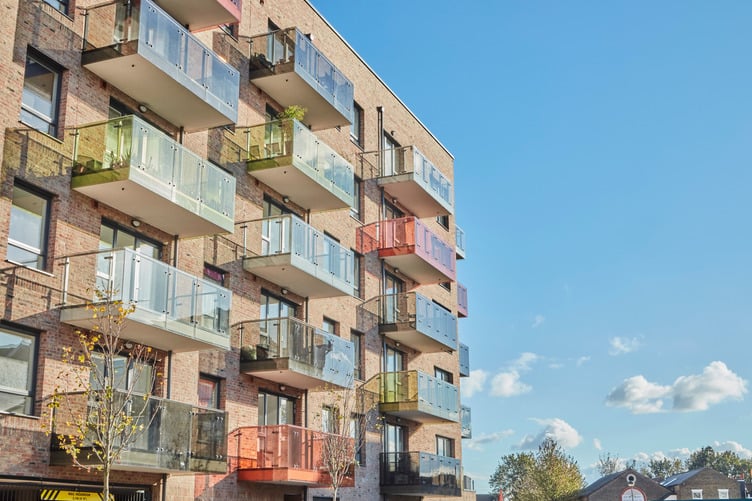
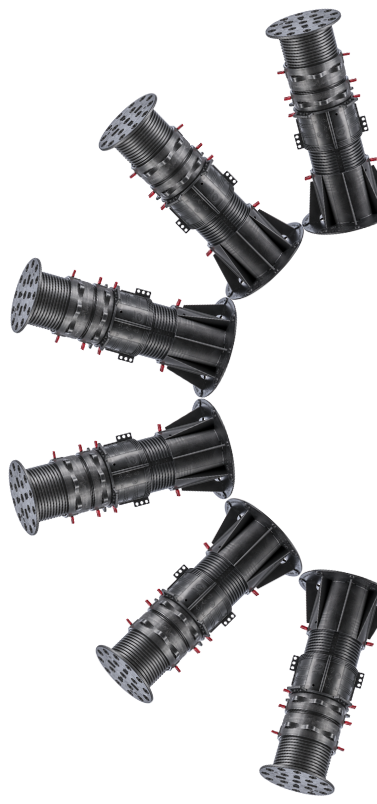
A good example of this in practice is Buzon's ongoing partnership with housebuilder Vistry, supplying the Class A1 A-PED metal pedestal system for apartment balconies across multiple residential developments. Supporting 20mm porcelain paving, the system provides a non-combustible solution, with additional wind uplift protection to secure the pavers on exposed balconies.
Need advice on specifying non-combustible pedestals? Contact the Buzon UK team to discuss your project requirements.